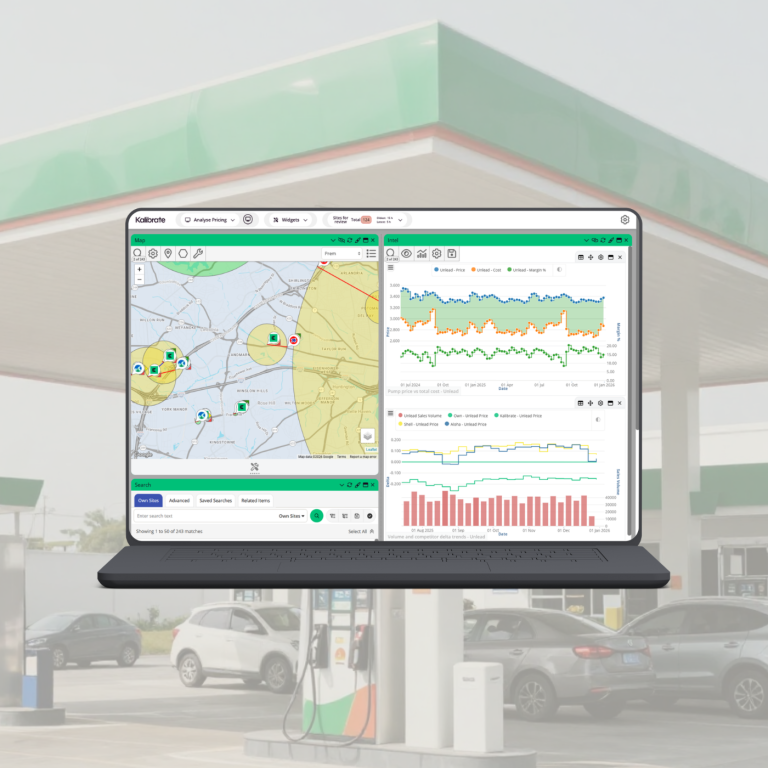
Choosing the right fuel pricing software is a critical decision for enterprise fuel retailers managing large or complex networks.
Beyond basic automation, leading platforms deliver the visibility, control, and confidence required to make faster, more informed pricing decisions, while allowing retailers to retain ownership of their pricing strategy and final pricing decisions.
This guide outlines seven essential features to look for. Helping fuel pricing managers evaluate vendors, understand what “good” looks like, and ask the right questions during the buying process.
-
Centralized pricing across your entire network
For enterprise retailers, consistency and control are everything.
Modern fuel pricing software should enable teams to manage pricing across hundreds, or thousands, of sites from a single platform, while still accounting for regional nuances and allowing the retailer to define the rules, strategies and controls that apply across its network.
What to look for:
- Central control with flexible rules for individual sites, markets, regions, or brands
- Support for multiple different pricing strategies across fuel networks
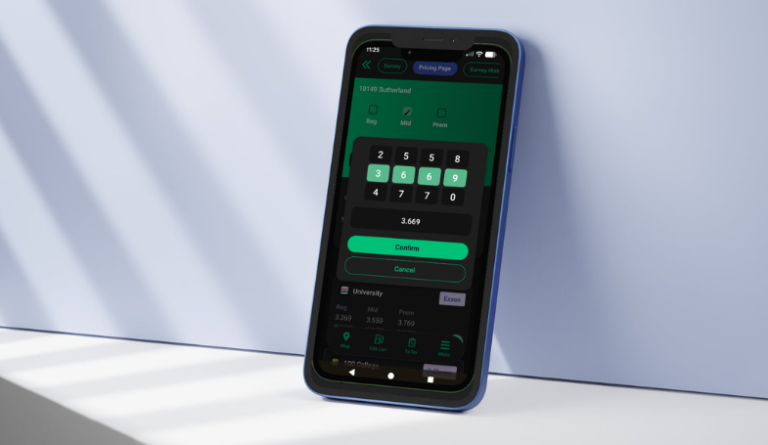
- The ability to quickly deploy retailer-approved fuel pricing decisions at scale
- User permissions and approval workflows that help retailers maintain appropriate oversight
Why it matters: It reduces operational overhead while ensuring fuel pricing strategies remain aligned and controlled across the business, without losing local relevance.
-
Market insight (without local knowledge)
Understanding local competition is essential for a successful fuel pricing strategy, but building local expertise across every market isn’t scalable.
Advanced fuel pricing tools now provide deep insights into local market dynamics, giving analysts additional information to inform their own pricing decisions, regardless of geography.
What to look for:
- Clear visibility of local competitors
- Insight into customer movements to identify true competition
- Understanding how competitors react to fuel pricing moves across the market
- Clear visibility into the data and market signals that support analysis
Why it matters: Analysts can interpret market conditions and make informed pricing decisions more efficiently, without needing prior market knowledge or spending hours manually interpreting market conditions. Essential for pricing multiple sites from a centralized system.
-
Full explainability for every fuel price change
In enterprise environments, fuel pricing decisions must stand up to scrutiny from leadership, finance, and operations teams, as well as the retailer’s own governance processes.
Best-in-class fuel pricing tools should make recommendations, actions, and changes fully traceable and explainable.
What to look for:
- A clear audit trail of fuel price changes
- Visibility into how recommendations are generated and which factors influenced them
- The ability to justify decisions with data
- A record of user actions, approvals, and changes where appropriate
- The ability to review how and why a recommendation was accepted, rejected, or modified
Why it matters: Explainability builds internal trust and confidence, while auditability provides a record of the pricing process and supports appropriate governance and oversight. This is critical when demonstrating the ROI of fuel pricing strategy changes.
-
Transparency (no black box decisions)
When choosing to use fuel price optimization, fuel retailers should expect complete transparency, not opaque “black box” price recommendations that cannot be understood or challenged by their pricing teams.
What to look for:
- Models that clearly explain their outputs
- Configurable guardrails and business rules defined in line with the retailer’s strategy
- Full control over how optimization operates within the confines of your strategy
- The ability for authorised users to review, accept, reject, or modify recommendations
- Clear separation between the software’s recommendation and the retailer’s final pricing decision
Why it matters: You retain tight control while benefiting from the speed and intelligence of fuel price optimization. The technology provides decision support, while your pricing team retains responsibility for the pricing strategy and decisions it chooses to implement.
-
Flexible views for distinct roles
Pricing analysts and executives have vastly different needs.
Effective platforms provide tailored views, allowing each user to focus on the metrics that matter most, while supporting appropriate levels of access and oversight.
What to look for:
- Customizable dashboards for analysts
- High-level performance views for leadership
- The ability to configure and save different workflows
- Role-based permissions and approval controls
- Visibility into pricing activity for those responsible for governance and oversight
Why it matters: It reduces friction, improves productivity, and ensures every stakeholder has instant access to the right insights while supporting clear accountability across the pricing process.
-
Best-in-class customer support
Technology alone isn’t enough. Especially in a complex, high-stakes environment like fuel pricing.
The strongest vendors combine software with deep industry expertise, helping retailers understand and use the technology while keeping commercial strategy and decisions firmly in their hands.
What to look for:
- Support teams with real fuel pricing experience
- Global coverage across time zones
- Longstanding client relationships
- Support that helps teams understand the process, rather than simply asking them to accept an output
Why it matters: When challenges arise, you need a partner who understands your world, not just your system. That expertise should help your team make informed decisions, rather than make those decisions for you.
-
Proven longevity through market volatility
Fuel markets are unpredictable, impacted by geopolitical events, economic shifts, and global crises. A vendor’s track record matters.
What to look for:
- Demonstrated experience across different regions and market conditions
- Evidence of supporting clients through volatility
- Technology that allows pricing teams to adapt their own strategies, rules, and controls as market conditions change
Why it matters: Demonstrable experience proves reliability, both in the platform and the partnership. Retailers should remain able to determine how they respond to changing market conditions, supported by relevant data and analysis from their pricing technology.
Final thoughts: Asking the right vendor evaluation questions
Selecting the right platform requires finding the right fit for your organization.
As part of your evaluation, consider asking:
- How does your platform support enterprise-scale operations?
- How are fuel pricing recommendations generated, explained, and validated?
- What level of visibility and control do we have over fuel price optimisation?
- Can our pricing team accept, reject, or modify recommendations?
- How are pricing actions, approvals and changes recorded for audit purposes?
- How does the platform help us maintain control over our own pricing strategy and decisions?
- What controls are available around the execution of pricing decisions?
- How do you maintain pricing independence and segregation between customers?
- How do you support clients during market volatility?
Conclusion
For enterprise fuel retailers, the stakes are high. The right fuel pricing software enables faster, more confident, better-informed decisions that directly impact margin and performance.
But analytical sophistication shouldn’t come at the expense of retailer control. Whether using rules, optimization, AI, or a combination of approaches, retailers should be able to understand the information and recommendations presented to them, apply their own business rules and governance, and retain responsibility for the pricing decisions they choose to implement.
By focusing on these seven core features, you can cut through vendor noise and choose a fuel pricing solution that delivers long-term value, while supporting transparency, explainability, governance and pricing independence.
This comparison table gives a useful overview of the leading fuel pricing software vendors.
Kalibrate supports retailer pricing independence. Retailers retain control of their pricing strategy and make their own pricing decisions, while Kalibrate provides the data, analysis, workflows, and decision-support tools that help them make and execute those decisions with greater confidence.