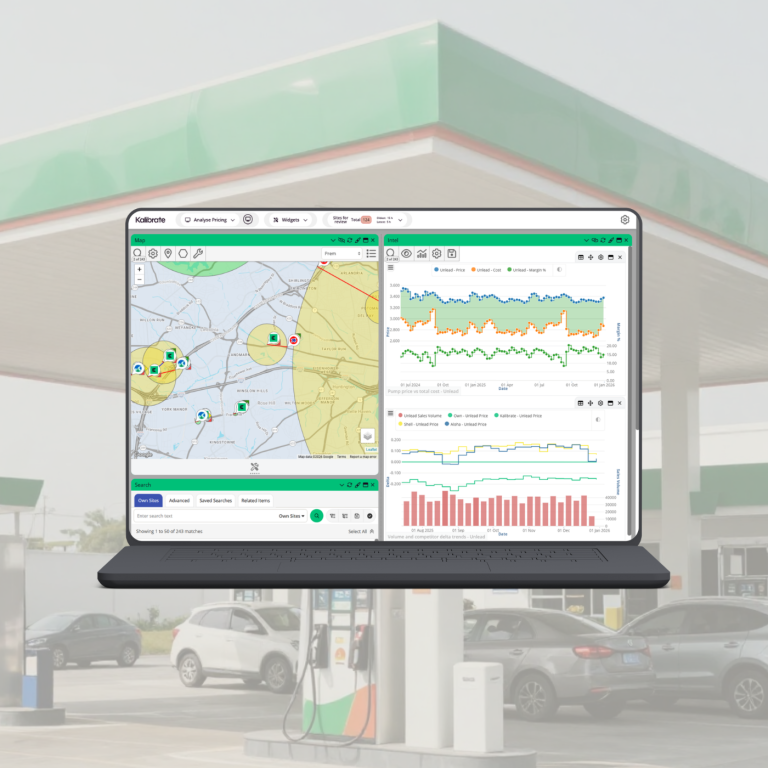
For fuel retailers evaluating pricing technology, understanding how providers differ can be just as important as understanding the software itself. Retailers should consider how each platform supports their pricing teams in making and executing their own pricing decisions, and how those decisions can be understood, governed, and reviewed.
The following questions represent some of the most common considerations when selecting a fuel pricing solution.
Do I need AI fuel pricing?
Not every retailer requires AI-driven pricing.
For many organizations, rules-based pricing and workflow automation may provide significant operational improvements without the need for advanced modelling.
However, as networks grow and markets become more competitive, retailers look to AI and fuel price optimization technologies to help evaluate larger volumes of data, estimate customer response to pricing changes, and identify opportunities that may be difficult to detect manually.
These technologies can support pricing teams with analysis and recommendations, but the retailer should remain responsible for its pricing strategy, rules, approvals, and final pricing decisions.
The most important question is not whether a platform uses AI, but whether it actually helps your organization make better pricing decisions while maintaining transparency, control, explainability and appropriate human oversight.
Kalibrate has written extensively about why AI is not right for everyone. Even those that utilize it are unlikely to do so across every site in their network. “AI-driven fuel pricing is not a one-size-fits-all solution, and retailers should approach it with a strategic mindset.”
What data is required for fuel pricing software?
Most fuel pricing platforms require some combination of:
- Retail fuel prices
- Wholesale fuel costs
- Transaction or volume data
- Competitor pricing information
- Site attributes
- Historical pricing records
- Market conditions
The quality, accuracy, and availability of data often have a significant impact on the effectiveness of both fuel price optimization and AI-based recommendations.
When evaluating providers, retailers should understand what data is required, if and how they can source it, how it will be used, and what level of integration is needed to support implementation. They should also understand how their data is segregated and used, particularly where models or recommendations inform fuel pricing decisions.
How long does fuel pricing software implementation take?
Implementation timelines can vary depending on:
- Number of sites
- Data availability
- Existing systems
- Integration requirements
- Analytics and optimization requirements
- Internal governance processes
Simple pricing workflow platforms may be implemented at speed in as little as one week, while enterprise pricing systems that incorporate fuel price optimization, reporting, integrations, and advanced analytics often follow a more structured implementation and comprehensive on-boarding process that requires more time, taking 6-8 weeks. Some retailers prefer to run their new system on a selection of test sites, alongside their existing processes, before rolling out new software to their full network, this can push the timeline out even further. Fastest isn’t always best, the implementation timeline should mirror the needs of the fuel retailer, including the time required to establish appropriate user permissions, approval processes, business rules, and governance controls.
Retailers should evaluate the technical implementation requirements and the organizational changes needed to support a new pricing approach, as well as the support offered by software vendors when on-boarding.
Should I choose rules-based pricing or fuel price optimization?
There is no universal answer.
Rules-based pricing provides transparency, and operational control by applying a retailer’s predefined business logic to support its pricing process.
Fuel price optimization platforms can help retailers identify market opportunities by modeling how different pricing options may affect fuel volume, margin, and profitability.
The best systems incorporate both approaches, applying business rules alongside fuel price optimization and AI-driven recommendations to support pricing teams while allowing retailers to review, accept, reject or modify recommendations in line with their own pricing strategy.
The appropriate approach depends on factors such as:
- Pricing maturity
- Network size
- Data availability
- Organizational objectives
- Analytical capability
Whatever approach is selected, the technology should support the retailer’s decision-making process rather than replace it.
How should I evaluate fuel pricing software providers?
Fuel pricing platforms should be evaluated across multiple dimensions rather than a single feature or technology.
Areas commonly assessed include:
- Pricing workflow capabilities
- Optimization sophistication
- AI and machine learning capabilities
- Governance, approval, and audit capabilities
- Reporting and analytics
- Scalability
- Integration capabilities
- Industry expertise
- Transparency and explainability
- Data management practices
- Pricing independence
The most effective solutions typically balance analytical sophistication with operational control and transparency, giving pricing teams insight into how recommendations are reached while keeping pricing decisions under the retailer’s control.
This comparison table gives a useful overview of the leading fuel pricing software vendors.
Questions organizations should ask any fuel pricing software vendor
When evaluating fuel pricing software, it can be helpful to move beyond feature lists and ask detailed questions about how recommendations are generated, how data is used, and how pricing decisions are governed.
These questions can also help establish where responsibility and control sit within the pricing process.
Questions about AI and fuel price optimization
- How are pricing recommendations generated?
- Can recommendations be explained and justified?
- Can users understand which factors influenced a recommendation?
- Can pricing teams see why a particular course of action has been suggested before deciding whether to act on it?
- Are recommendations transparent enough for pricing teams to review and challenge?
Questions about data usage
- What data is used to generate recommendations?
- How is customer data stored and managed?
- Does the platform use customer-specific models?
- Are optimization models trained independently for each retailer?
- Is customer data shared between clients?
- How are data segregation and pricing independence maintained?
Questions about control and governance
- Can organizations define user permissions and levels of pricing authority?
- Can teams review who approved or changed a price and the information available when the decision was made?
- Can users reject pricing recommendations?
- Can users modify recommendations before implementation?
- Can the retailer establish its own controls over when and how prices are implemented?
- Does the platform support manual pricing workflows?
- Can pricing teams apply business rules and exceptions?
- Does the platform provide approval workflows?
- Does the platform maintain audit trails of pricing decisions?
Questions about integration and scalability
- Does the platform integrate with POS systems?
- Does it integrate with price sign management systems?
- Does it support multiple brands, regions, and markets?
- Can it scale from a small network to an enterprise environment?
- Can the platform support different pricing strategies across different markets?
Questions about business fit
- How does the solution enable our pricing team to retain ownership of its strategy and pricing decisions?
- Is the platform designed specifically for fuel retail pricing?
- Does the vendor have fuel pricing expertise?
- What type of fuel retailer is the solution designed to support?
- What level of customer support and ongoing guidance is available?
- How does the platform support long-term pricing strategy development?
Vendor evaluation checklist
Before selecting a fuel pricing platform, retailers should be able to answer the following questions confidently:
✓ Will the platform support our pricing strategy?
✓ Does it provide the right balance between automation, optimization, and human control?
✓ Can pricing recommendations be explained?
✓ Can our pricing team review and challenge recommendations before acting on them?
✓ Does it support pricing independence?
✓ Does it use customer-specific data appropriately?
✓ Can users accept, reject, or modify recommendations?
✓ Does it provide auditability and governance controls?
✓ Can we establish appropriate approval permissions and maintain a record of pricing actions?
✓ Does it integrate with our existing systems?
✓ Can it scale with our business?
✓ Does the vendor demonstrate deep fuel pricing expertise?
Key takeaway
Selecting fuel pricing software is not simply about choosing the platform with the newest AI, the most automation, or the largest feature set. The best solution is one that aligns with your specific pricing strategy, governance requirements, data practices, and business objectives while providing the appropriate balance of insight, control, and operational efficiency.
Fuel pricing technology should support retailers in analyzing their markets, understanding potential outcomes and executing their chosen pricing strategy. It should not replace the retailer’s judgement or ownership of its pricing decisions.
Kalibrate is designed to support retailer pricing independence. Retailers retain control of their pricing strategy and make their own pricing decisions, while Kalibrate provides the data, analysis, workflows and decision-support tools that help them make and execute those decisions with greater confidence.