Results at a glance
- Preem is responsible for 80% of Swedish refinery capacity and 30% of refining capacity across the Nordic region.
- Before Kalibrate, Preem used ad hoc methods to collect competitor-price information, including dealers calling in prices from nearby sites.
- The company did not have a tool for recording local market prices, and its price-data collection and implementation processes were cumbersome and slow.
- Kalibrate introduced a fully integrated pricing process using auto-implementation and exception-based workflows to support faster responses to market changes.
- Preem commissioned an external consulting firm to assess 100 sites over a two-month period. The study compared the first 50 sites using Kalibrate with the final 50 sites in the rollout plan.
- The benchmark study identified an immediate 4% increase in profitability.
- The implementation introduced new tools and routines affecting more than 500 people.
- Preem reported that Kalibrate enabled it to manage a large number of pricing decisions with fewer resources.
The background
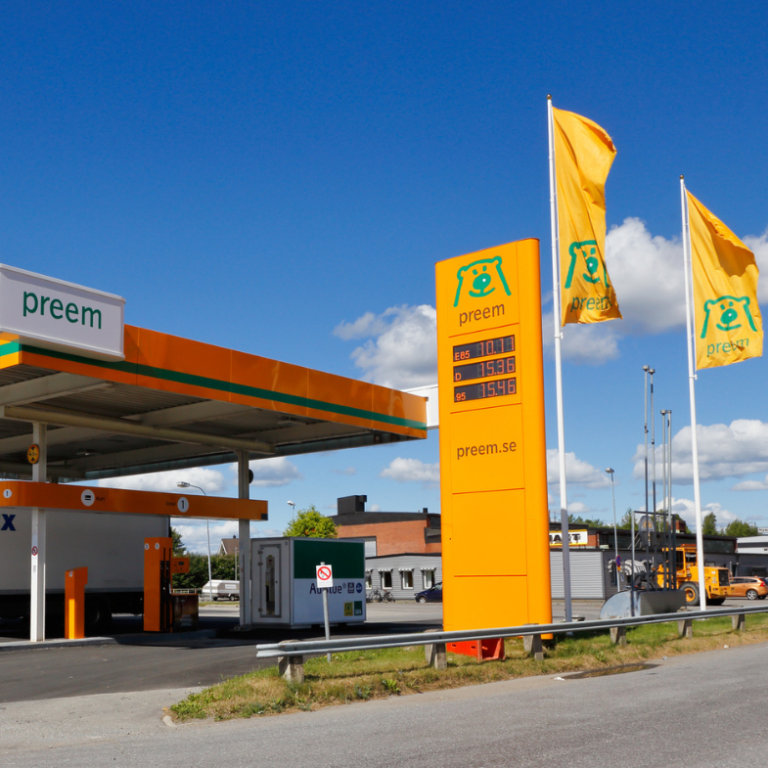
Preem is the largest refiner of crude oil in the Nordic region, responsible for 80% of Swedish refinery capacity and 30% of Nordic capacity. Preem’s refineries are among the most modern, environmentally-friendly, and energy-efficient in Europe. Preem exports half of its petroleum production to the international market, making it one of the biggest Swedish exporters.
As the largest oil company in Sweden and a leading provider of gasoline, diesel, and heating oil, Preem needed to access the highest level of efficiency around the execution of fuel price changes. The company, like most of its competitors, relied on ad hoc methods of gathering price data and implementing price changes. The company did not have any tools to record local market prices, so collecting data, typically by dealers calling in prices of nearby competitors, was cumbersome and implementation slow.
The solution
After reviewing available technology solutions, Preem implemented Kalibrate Pricing for a fully integrated fuel price management offering. The comprehensive approach of Kalibrate Pricing could support the key tasks of all stakeholders involved in retail fuels pricing.
High levels of automation and an ‘exception-based’ approach ensured a rapid response to competitors and market conditions. The approach allowed pricing analysts to leverage the power of prescriptive analytics, focusing them on high-value analytic decision making. It also facilitated exchange of data between field offices and the head office to allow review and authorization of price adjustments more quickly at a local level.
The result
Preem wanted to understand the impact of Kalibrate Pricing on profitability, so they conducted a benchmark study of 100 sites. The first 50 sites pricing with Kalibrate Pricing were used as a benchmark, comparing their data to that of the last 50 sites in the roll out implementation plan. The comparison was done by an external consulting firm over a two-month period. According to key members of the pricing team at Preem, the company was able to detect an immediate 4% increase in profitability.
The pricing team at Preem decided it was time to make changes. A pricing strategy, called sustainable pricing, was approved. It was stated that pricing decisions needed to be rational and based on fact, and local price implementation needed to be quickly and uniformly executed. This was essential to gain control over margins and volume at each fuel outlet.
“This was an extremely important signal for us. We were working hard implementing a new set of tools and new routines that affected over 500 people and still we were performing far better than before.”
Once fully implemented across the network, the advantages of price optimization became routine. Preem continued to see upward trending results. Previously, margins at the company’s fuel outlets were variable because of random pricing decisions. After implementation, there is less fluctuation and gross margins have increased significantly and are now more predictable. The access to accurate local market conditions through Kalibrate Pricing made it possible for Preem to proactively manage its sites.
“For example, where market share is strong, we now have the ability to drive local markets by implementing uniform pricing throughout a city, which we couldn’t do before. Preem is able to take greater responsibility for margins and avoid local price deterioration which in the past would have led to losses.”
A Preem executive commented that Kalibrate enabled the company to manage large numbers of pricing decisions with fewer resources. The centralized process limits involvement of field operations teams, which helps reduce costs. The executive also highlighted the increased capacity to compete in volatile markets while also monitoring compliance regimens.